
Professor Jamie Rossjohn honoured with prestigious international award
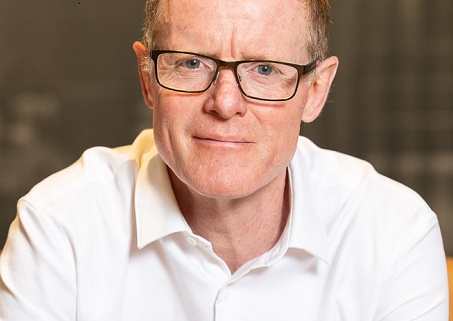
Leading researcher Professor Jamie Rossjohn from the Monash Biomedicine Discovery Institute has been selected to receive the Ceppellini Award 2024 in memory of Ruggero Ceppellini, one of the pioneers in the field of immunogenetics. The prestigious lifetime achievement award was presented at the 37th EFI Conference in Geneva, Switzerland on 20 May 2024.
As the awardee, Professor Rossjohn was also invited to present his work in the form of the Ceppellini Lecture during the conference’s opening ceremony. His lecture was on the topic of T cell immunity, specifically interactions mediated by the T cell receptor.
Professor Rossjohn received the Ceppellini Award for his significant contribution to understanding defined events central to cellular immunity. His research in T cell immunity has provided an understanding of the molecular basis of peptide, lipid and small molecule presentation – both in the context of infectious disease and unwanted immunity, as occurs in autoimmune disorders such as rheumatoid arthritis and in drug and food hypersensitivities such as Celiac Disease. Professor Rossjohn is the 35th recipient of the award, which he accepted from Dr. Ann-Margaret Little, President of the European Federation for Immunogenetics.

Professor Rossjohn is currently a National Health and Medical Research (NHMRC) Investigator Fellow at Monash University, was a recent Australian Research Council Laureate Fellow from 2017-21 and has been recognised as a Clarivate Web of Science Highly Cited Researcher from 2018-2023. In 2022, Jamie was elected as a Fellow of the Royal Society (UK), a Fellow of the Australian Academy of Health and Medical Sciences in 2017 and a Fellow of the Australian Academy of Science in 2014.
Professor Rossjohn said that it was an honour to receive the Ceppellini Award. “It came as a bit of a shock to me, and my close companion, Ziggy, to be recognised in this manner, as some very heavy hitters have come before me in receiving the Ceppellini Award, “ he said. “It’s a testament to our sustained research in this area for the last 20-plus years, and of the collaborations, research fellows and students who have worked alongside me. These findings would not have been possible without funding from the NHMRC and ARC, and most importantly, the ‘think big’ research environment that Monash fosters.”
Find out more about Professor Jamie Rossjohn’s research.